Sunday, 22 June 2014

Inferno’s SSSI – Site of Special Science-fiction Interest

By Danny Nicol

“Inferno” (1970) is one of the finest Doctor Who stories.  It is the first to introduce the idea of parallel universes, and in so doing imagines a fascist Britain.  The plot involves an attempt to drill through the Earth’s crust in order to harness a new power source.  In the parallel-fascist Britain, secrecy, authoritarianism and deference combine to prevent any real resistance to the dangers of the project.  In one of the most tense Doctor Who stories ever broadcast, this leads to the destruction of the planet, and the Doctor has to try to return to our own reality in order to prevent the same fate befalling us.

 
The drilling operation turns humans into Primords 

In The Humanism of Doctor Who, David Layton observes that the negative image of the fascist Britain in “Inferno” is always implied in the “real” Britain of the Doctor Who world (D. Layton, The Humanism of Doctor Who (Jefferson NC and London: McFarland, 2012) 329).  Real Britain still has disparities in social power, rigidity of social structure, an over-reliance on authority and so on.  Thus for Layton the genius of “Inferno” lies in the similarities between the parallel fascist Britain and our own.  


The Doctor encounters the fascist
version of companion Liz Shaw
In a sense, though, Doctor Who imagines alternative universes in each and every episode, through its sustained use of metaphor.  Thus “Inferno” really offers three universes to compare and contrast – fascist Britain, "normal" Doctor Who Britain, and our own Britain.   I am looking forward to hearing a paper on parallel universes in Doctor Who (and Star Trek) from University of Wolverhampton academics Dr Aidan Byrne and Dr Mark Jones at the “Politics and Law of Doctor Who Symposium”, for further insights into “Inferno”.


The film location of “Inferno” is the Kingsnorth Industrial Estate on the surreal Hoo Peninsula in north Kent, an area I know and love.  Here am I on the quirkily-named promontory Horrid Hill, with the Kingsnorth Industrial Estate in the background across the estuary of the River Medway.   

Bleak house: the "Inferno" film location looms through the mist

The area forms “Boris Island”, the piece of land which the Mayor of London, Boris Johnson, wishes to turn into London’s main airport replacing Heathrow.  Yet this rural Peninsula contains fruit farms (Kent being famously “the garden of England"), the marshes in which Charles Dickens based Great Expectations and two huge RSPB bird reserves.  It has a remarkable sense of remoteness despite being close to London.  The “Inferno” location itself is incongruously surrounded by countryside: just outside its perimeter fence are marshes teeming with waterfowl. 


The protected “green belt” which surrounds Britain’s cities is essential not just for those who live there but for those who don’t – city dwellers who need greenery and space.  It provides respite from the insatiable concreting-over of our country.  The London Mayor believes “Boris Island” would be good for business: thankfully many business leaders disagree.  Nonetheless more recent Doctor Who stories have often imagined worlds dominated by corporate interests – and no doubt if “Inferno” were conceived today, the drilling would be a private not public sector operation.  Applying David Layton’s idea, ours is rather too close to these alternative worlds for comfort: the relentless domination of economic concerns over the environment is what “Inferno” rightly warns against.  

Thursday, 5 June 2014

Class, Euroscepticism and “The Monster of Peladon”

By Danny Nicol

Peladon – it’s an insular kingdom, cut off from the rest of the galaxy, archaic and twee, with a quirky established religion and an antiquated class system.  I wonder what country that’s supposed to be!

The Doctor’s first visit to this isolated planet (“The Curse of Peladon” (1972)) is widely acknowledged as an allegory for Britain’s accession to the European Communities (now, European Union).  The Doctor sides with those who favour Peladon’s entry into the Galactic Federation against a primitive and self-serving opposition.

The Doctor and companion Sarah Jane Smith encounter
representatives of the Galactic Federation
The solidly pro-EC stance of “The Curse of Peladon” was, however, reconsidered two years later in “The Monster of Peladon” (1974).  This less-well-crafted story is set some fifty years after the Doctor’s earlier encounter with the planet (ironically Britain's half-century milestone as an EC/EU Member State is not so far off).  The story rather overflows with political messages concerning feminism and the miners’ strike of 1974. However these strongly-expressed themes have rather obscured the story’s intriguingly unfavourable account of supranationalism.  Needing minerals for a war in which the Federation has become embroiled, the miners of Peladon are being worked excessively hard.  Federation troops are brought in to replace domestic troops in order to police the miners, and there is a threat that Federation workers will mine the minerals if Peladon miners down tools. The villains of the piece are the Ice Warriors, who as members of the Federation appear to be manipulating it for their own ends.  In particular the introduction of Federation troops seems to be a cover for an invasion by an oppressive Ice Warrior dominated force, authorised to use any terror method.   Of course things come right in the end, and the Doctor leaves Peladon with more social mobility, less sex discrimination and a more sceptical view of galactic integration. 

As an allegory “The Monster of Peladon” can be read as offering three valuable insights into Britain’s European engagement. 

First, interest lies in the swiftly-diminishing legitimacy of the Galactic Federation.  This legitimacy – like that of the EU – is results-orientated, not process-based.  In other words legitimacy relies on the benefits received from membership not on the organisation’s democratic attributes. On this basis the Doctor himself speedily becomes a Federation-sceptic.  He opines that the Federation has brought many of its troubles on itself: after fifty years of membership the miners of Peladon have got harder work for the same rewards.   Similarly with the EU, the Eurozone crisis has damaged its legitimacy, and it cannot recover ground by appealing to non-existent democratic credentials.

Give back our planetary sovereignty!
The Queen of Peladon confronts an Ice Warrior
Secondly, “The Monster of Peladon” shows that the contractarian argument – the idea that the UK signed up to “a Community of unlimited duration” and so must accept its benefits and burdens – will only take us so far.  In the story, the Queen of Peladon complains that her people have been dragged into a war which is not their own, only to be admonished by Ortron, her Chancellor and High Priest, that “we have to accept the duties of Federation membership, as well as the benefits!”  In a later episode the Queen laments the violation of Peladon’s planetary sovereignty; she reflects that when her father signed treaties with the Federation, he could not have known it would lead to nothing but bloodshed; as it is, she reflects, Peladon must accept the consequences.   Yet in the end, as the story shows, there is always a right to revolution.  The EC/EU is at one and the same time an international arrangement and an important part of the constitutions of the Member States, and the British constitution is traditionally easy to change.  Against that backdrop the idea that a previous generation of politicians can bind a political community not to change things is problematic.

Working class hero?
The Doctor makes common cause with Peladon's miners

Thirdly, and most importantly, the story flags up the class nature of supranational integration.  On Peladon, it is in particular amongst the ordinary people that disillusionment with the Federation is most keenly felt.  The miners complain that the promises of Federation membership failed to materialise: “the Federation told us things would be better.  So they are - for the nobles and the court.  We got nothing as usual!”  This leads in turn to resentment at the loss of sovereignty: according to Edis, one of the miners’ leaders, much though he resents the privilege of the Queen’s court, he resents still more that the “real masters” are the Federation.  This chimes with the upsurge in popularity of Eurosceptic parties throughout Europe – including UKIP’s successes in Northern England, Wales and Scotland.  The Eurozone crisis, the permanence of privatisation by dint of EU competition law, and the effect of the free movement of persons on job security and terms and conditions, all suggest that the European project is not some purely technical matter.  Class interests do not stop at the door of the European Union.  Agustin José Menéndez has observed that British entry into the EC did not affect all Britons equally. Indeed, whether you derived a benefit or burden from the country’s EC membership was determined not by your being British but by your socio-economic position.  (See A.J. Menéndez, “Whose Justice? Which Europe?” in Grainne de Búrca, Dimitry Kochenov and Andrew Williams, eds., Europe’s Justice Deficit (Oxford: Hart, 2014, forthcoming)).  “The Monster of Peladon” underlines that different constitutional arrangements benefit different classes of people, and in this regard European integration is no different from any other constitutional change.


Monday, 2 June 2014

Revisiting "The Invasion"

By Craig Owen Jones

One of the finest Doctor Who serials of the 1960s was ‘The Invasion’ (1968), an eight-part story directed by Douglas Camfield in which Patrick Troughton’s Second Doctor, together with companions Zoe (Wendy Padbury) and Jamie (Frazer Hines), are confronted with the megalomaniacal schemes of Tobias Vaughn (Kevin Stoney), the president of multinational corporation International Electromatics. As James Chapman and others have pointed out, in many ways the serial prefigured the future narrative direction of the programme. The primary plot point, whereby a multinational conglomerate exerts hegemonic control over an aspect of the world’s market, was to become a staple of Doctor Who; similar tropes have formed key elements in stories such as ‘Partners In Crime’ (2008) among others. Nor was the choice of an electronics company an accident, resonating with contemporary doubts over the speed of technological development in general (and computers in particular) – doubts that manifested themselves in debate over the viability (and wisdom) of embracing what Harold Wilson referred to as the ‘white heat’ of technology.

The Cybermen invade London

‘The Invasion’ does, however, maintain a surprising silence on another, equally topical matter. As the first serial set in contemporary Britain to be screened following the extraordinary tumults of the late spring and summer of 1968, it is extraordinary that the version of England presented in ‘The Invasion’ has nothing whatsoever to say about them. The unrest in America following the deaths of Martin Luther King and Robert F. Kennedy, the racial tensions in Britain exemplified by Enoch Powell’s ‘rivers of blood’ speech (delivered in April, sandwiched between the first and second readings of the Race Relations Bill in the House of Commons) and the strikes that followed his censure, and the radicalism of the Sorbonne are all firmly eschewed in favour of a not unsuccessful portrayal of swinging London.  For all her feminist bluster - borne witheringly by the males around her - supporting character Isobel (Sally Faulkner) is an aspiring fashion photographer with a penchant for mini-skirts and the quirkiness of the Portobello Road market, and Jamie’s interest in International Electromatics’ new model of portable radio is restricted to the pop music emanating from it.


Swinging Sixties: Companion Zoe and photographer Isobel encounter magnate Tobias Vaughn

It is only fair to point out that Doctor Who was not the only science fiction series to find the depiction of the social unrest and radicalism that encapsulated the end of the 1960s in Europe, America, and elsewhere problematic. The counterculture that formed the backdrop to that unrest was in many ways the most obvious object of comment, and less than three months after the broadcast of ‘The Invasion’, Doctor Who’s contemporary show, Star Trek, made an attempt at a critique. ‘The Way To Eden’ (1969) featured a group of cultish space aliens – thinly-veined depictions of hippies – whose quest for the mythical planet of the episode’s title ultimately brings nothing but death. The cultural politics of this widely-derided episode is painted in broad strokes, but it did at least represent an attempt of sorts to engage with this particular aspect of contemporary cultural affairs. Doctor Who viewers would have to wait until the 1970s, and the appearance of Jon Pertwee’s Third Doctor, for similar treatments.

Wednesday, 14 May 2014

Must the Doctor be a white male?

 
The short answer is “no”.  In “The War Games” (1969) the Doctor, obliged to regenerate, turns down several new bodies offered to him by the Time Lords including  - seemingly - that of a black man; “The Doctor’s Wife” (2011) confirms that Time Lords can change gender when they regenerate.  Yet, come the new Doctor Who season, the new Doctor will be another in the solid phalanx of (admittedly talented) white males who have ruled the roost in the console room since 1963.


Potential Doctor: Sophie Okonedo, one of the country's most magnificent
actors.  Deserves to be a Dame, or better still, the Doctor!
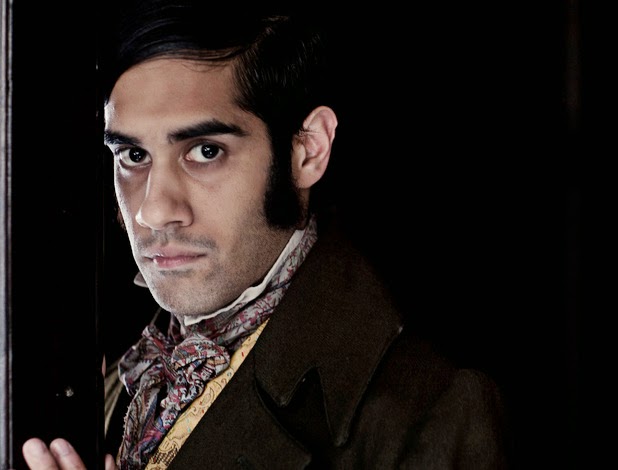
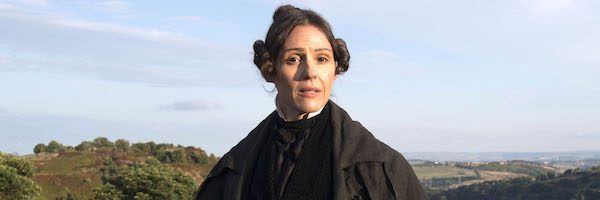
Yet the excuse that a white male actor is “so talented” is wearing a bit thin.  It ignores the fact that this tiny, damp little island is awash with outstanding female and ethnic minority actors who could pilot the Tardis with quite as much acting prowess as their white male counterparts.  Three of this blogger’s favourites for stints as the Doctor would be Sophie Okonedo, Suranne Jones and Sacha Dhawan, and here they are looking marvellous in old-fashioned, Doctor-style get-up.  And they are far from being the only British non-white and women thespians who could wield the sonic screwdriver with panache.

Potential Doctor: Sacha Dhawan looks dashing in wing collar and bow tie -
so shouldn't he be dashing down a corridor, on a spaceship?

So why another white man?     If we see the Doctor as a political leader, as he surely is, then the conservatism of the show runner and production team in casting the new incumbent reflects the cultural politics of British society.  Thus women form the majority of the population yet only one in five legislators in the United Kingdom Parliament is a woman.  Some 18% of British subjects are non-white but only 4% of MPs.  The Cabinet is 18 men and 3 women: only one is ethnic-minority.   And the discrimination in British politics is mirrored in British society as a whole.  White men run the country so white men run the Tardis.


Yet in the population at large, white men are decidedly in the minority.  Thus the unwritten rule banning women and ethnic minorities from playing the Doctor is increasingly undermining the show’s aim of representing Britishness.  It may be too late this time around, but breaking the white-male monopoly on portraying the Doctor would serve as a splendid demonstration of the inclusivity of British national identity.


Potential Doctor: Suranne Jones has already
played the TARDIS - so why not the Doctor?


Wednesday, 30 April 2014

Is Doctor Who unionist?

The forthcoming Scottish independence referendum raises the question of Doctor Who’s stance on the union between the four nations making up the United Kingdom.  One should bear in mind that the “new show” has been broadcast entirely during the era of devolution whereby Scotland, Wales and Northern Ireland take more of their own decisions themselves through their own assemblies and administrations.  This system, now well established, contrasts with the unitary constitution which prevailed in the days of the “old show” when the entire United Kingdom was governed by Whitehall and Westminster.  Devolution arguably prompted the BBC to project a more varied conception of Britishness.  It also means that Scotland’s choice will be between devolution and separation.

Against this backdrop it has been a remarkable coincidence that new Doctor Who’s two showrunners, Russell T. Davies and Steven Moffat, have been Welsh and Scottish respectively.  The new show is made by BBC Wales and the 2005 revival saw Wales relatively frequently used as a locus for stories (e.g. “The Unquiet Dead” (2005), “Boom Town” (2005), "The Hungry Earth"/"Cold Blood" (2010)) in contrast to the old show’s almost exclusive assumption that stories set in Britain were set in South East England. 

Amy and Rory being, to coin a phrase, Better Together
The new show’s Scottish and Welsh characters have occasionally expressed somewhat nationalistic attitudes.  Most notably companion Amy Pond as a child expresses the view that England is “rubbish” compared to Scotland (“The Eleventh Hour (2010)), and voices approval in “The Beast Below” (2010) at learning that, in the distant future when humans are obliged to leave Earth, the Scots insisted on a starship of their own rather than embarking on Starship UK.  The Doctor himself comments on the Otherness caused by Amy’s Scottish identity: she’s a Scottish girl in an English village and he knows how that feels.   Gwen and Rhys in the spin-off Torchwood joke about needing injections as they cross the Severn Bridge from Wales into England.

In fact these mild comments are outweighed by a stronger current of unionism in the show.  Take Amy Pond.  Amy is indeed a Scottish girl in an English village: she chooses to remain there and she chooses to marry an Englishman, ultimately favouring him over the Doctor (“The Angels Take Manhatten” (2012)).    The Scots’ decision to go off in a starship of their own in “The Beast Below” can likewise be turned on its head; it presupposes that the UK remains united for thousands of years until humans are forced to desert the planet.   As for Gwen Cooper, she opts to work for that most British of organisations, Torchwood, created in Scotland by a British Queen in order to protect the whole of Great Britain (“Tooth and Claw” (2006)).
 
Gwen poised to enhance Anglo-Welsh relations with colleague Owen
Images of the Union Jack also abound under both showrunners far more than in the old show.  More significantly, since the issue of the union relates to governance, the programme’s unionism can also be seen in the new show’s portrayal of civil servants.   These were a breed portrayed in early 1970s Doctor Who as exclusively English, upper class, greedy, nationalistic buffoons (see for instance, Mr Chinn in “The Claws of Axos” (1971) and Mr Walker in “The Sea Devils” (1972)). In their place in the new show we have the Welsh Mr Llewellyn in “The Christmas Invasion” (2007) and the Scottish Professor Bracewell in “Victory of the Daleks” (2010) both of whom are cast in a heroic light as British civil servants. 
 
Courageous Mr Llewellyn (second from the left) with Prime Minister Harriet Jones

Of course Doctor Who always has to deploy a certain subtlety: as Professor Matt Hills has observed, the show cannot be too obviously about real-world, contemporary politics: it isn’t a political thriller (Triumph of a Time Lord, London: IB Tauris, 2010. p.138).  The bottom line, however, is that Doctor Who is the product of the British Broadcasting Corporation and cannot seriously have a separatist agenda.  Thus, despite relishing national differences and deploying them for tension and humour, BBC Wales’ Doctor Who remains quietly but firmly unionist.


Sunday, 26 January 2014

Westminster Law School watches "The War Games"


The War Lord (Philip Madoc) faces trial by the Time Lords

Is this the first time a university Law School has watched Doctor Who collectively?  Perhaps!  Under the aegis of its Centre for Law Society and Popular Culture, Westminster Law School held a viewing of the seminal episode 10 of "The War Games" last week, with an introduction by Professor Danny Nicol.  The episode centres on two trials held by the Doctor's people, the Time Lords.  They try an alien called the War Lord, for having gathered together human soldiers from different eras in time, in order to wage war on each other with a view to creating a super-army out of survivors to conquer the galaxy.  They then try the Doctor, one of their own species, for having interfered in the affairs of other planets.

"The War Games" is the high water mark of Time Lord gravitas.  Yet Westminster's legal scholars were not overly impressed by the Time Lords' idea of a fair trial and there was considerable questioning of their legitimacy to act as guardians of the Universe.   The academics observed how the Time Lords' black-letter law diverged from the far more flexible view of law put forward by the Doctor, and yet there was a lack of reasoning for the Time Lords' decisions.  Cold war and anti-colonialist themes were readily identified, and it was noted how heavily the episode would have been influenced by the war crimes trials of the era such as Nuremberg and Eichmann.  

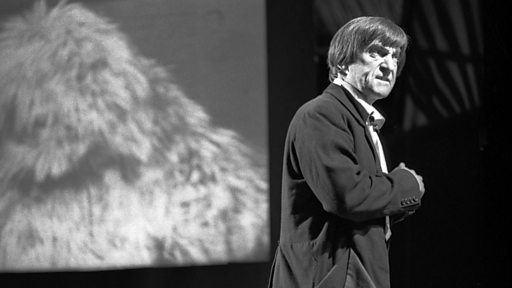
The Doctor (Patrick Troughton) presents his defence
The event was a precursor to a symposium which the Centre is holding in September on "The Politics and Law of Doctor Who".


Wednesday, 4 December 2013

Doctor Who and the constitution

The BBC’s longest-running drama series Doctor Who might seem rather distant from matters of constitution and law.  In fact questions of politics, law and the constitution continually arise in Doctor Who stories.    Each new planet on which the Doctor’s time-and-space machine, the Tardis, materialises, has a different constitutional story to tell.  And a series which purports to be about distant epochs, far-flung planets and bizarre monsters, is often really about Britain, its politics and its law.

To instance a few issues constantly raised in the show:

  • The question of constitutional globalisation looms large.  At one stage – the late 1960s and early 1970s – Doctor Who’s writers assumed that a shift from national to supranational governance would be fundamentally progressive.  Accordingly Doctor Who stories constantly denigrated the British state and upheld international endeavour as the way forward.  The show deployed intergalactic law as an extended metaphor to the same effect.   This position radically shifted in the post-2005 show, abandoning the knee-jerk hostility to national institutions and displaying a constitutional patriotism borne of disillusionment with supranational governance.

  • The issue of war crimes and their relationship to British foreign policy also features prominently.  The legitimacy of the Doctor’s interference on other planets is always in question, but this questioning intensifies markedly in the post-2005 “new show”.  Time and again the Doctor’s right to judge between good and evil is challenged.  This coincides with Britain’s intervention in Iraq and Afghanistan and the seeming immunity of British and American leaders from prosecution for war crimes.      

  • The programme engages repeatedly with the issue of corporate power.  The power of private companies was strikingly ignored in the programme’s early years.  Later, however, the theme became pervasive.  Again, this reflected change in Britain, where the neoliberal nature of globalisation has fostered the development of the transnational corporation and has handed constitutional-law rights to corporations.  Critiquing Britain’s relentless shift towards privatisation and contracting-out, Doctor Who frequently imagines situations in which powerful private companies go beyond their business role and essentially become the State itself, infringing the most basic rights of the individual.  The show also persistently links such “corporation-states” with imperial expansion.
The Doctor poised to fall out with British Prime Minister Harriet Jones

In the interdisciplinary spirit of the age, the Doctor’s adventures merit academic attention, including from scholars in the fields of law and politics.  To this end, Westminster Law School is organising a symposium on the programme’s legal and political aspects:

The Doctor meets Queen Elizabeth the Tenth of the United Kingdom (Liz 10)
Through allegory, Doctor Who provides not only a reading of the state of Britain but an underlying normative critique of the country’s governance. This is a good thing, because we live in an era of political convergence in which differences between the British political parties have significantly narrowed. This has contributed to a lack of incisive critique of the political and legal status quo outside the academy. The same spirit has to some extent seeped into academia, leading to a “flattening” of criticism. Against this backdrop, thoughtfully-written, multi-authored programmes such as Doctor Who can contribute to providing the more critical voices presently lacking. It is to be hoped that Doctor Who – besides entertaining millions of people in Britain and worldwide – continues for years to come to contribute to the political and legal controversies surrounding our permanently-contested national identity.